Monday, October 5, 2020

Prevalence of Intestinal Parasitic Infections among Patients Attended to Alribat University hospital, Khartoum State, Sudan, 2017_Crimson Publishers

Prevalence of Intestinal Parasitic Infections among Patients Attended to Alribat University hospital, Khartoum State, Sudan, 2017 by Leonardo Brantes Bacellar Mendes in Cohesive Journal of Microbiology & Infectious Disease

https://crimsonpublishers.com/cjmi/fulltext/CJMI.000540.php

Interest in alternative fuel sources to oil has fluctuated throughout contemporary history according to the availability of this resource. The biggest impact of the reduction in the supply of oil is the increase in the price of the barrel practiced in the international market.

The first oil shock in 1973 showed that the price of the barrel rose rapidly, from US $ 2.90 /barrel to US $ 11.65/barrel in three months, causing enormous losses in the economy of countries that do not have strategic oil and gas reserves (e.g.: Germany, France and Italy).

In the late 1970s amid the second oil shock, when the price of a barrel of oil exceeded US$ 80.00, renowned German and Italian scientists began research to obtain microalgae fuels - notably from Tetraselmis sp - in southern Italy.

Throughout the 1980s, with the normalization of oil prices in the international market, the interest for fuels from microalgae was very low and the activities of microalgae cultivation were directed to aquaculture, nutraceutical production and fine chemical compounds, highlighting the genera Chlorella and Dunaliella, as well as the cyanobacterium of the genus Arthrospira.

It is important to note that even during this period with less demand for microalgae fuels the US government did not cease its investments and promoted research and development activities to obtain products such as ethanol and biodiesel over 15 years through the Aquatic Species Program. A new moment arose between 2008 and 2009 when the price of oil surpassed US $ 120/barrel, making the interest in research and development focused on microalgae fuels resurface once more on the international scene.

Since then, new governmental incentives have been allocated in several countries, A. Mainly in the USA through the National Renewable Energy Laboratory. It has given a considerable boost to many universities and small companies with expertise in micro-algal biotechnology.

Several projects aimed at obtaining microalgae biomass were developed using photobioreactors, open ponds or heterotrophic culture technologies in bioreactors in the absence of light. Among the main scientific problems presented during the upstream projects were the high cost of investment for photobioreactors and the difficulty in achieving stability and high productivity in open ponds.

As regards the processing of microalgae biomass, there were also several research and development projects aimed at improving the efficiency and cost-effectiveness of the steps of harvesting, cell disruption, extraction and conversion of the target compounds into biofuels (e.g.: ethanol, biodiesel and jet fuel).

For more open access journals in Crimson Publishers,

please click on link: https://crimsonpublishers.com/

For more articles in Infectious Disease Open Access Journals,

Please click on link: https://crimsonpublishers.com/cjmi/

Source: crimsonpublishers.com

#Crimson Publishers#Crimson Publishers journals#Crimson Publishers LLC#Infectious Diseases#International Journal of Microbiology


Monday, September 28, 2020

Characterization of Mycobacterium Tuberculosis Complex Strains: A Multicenter Retrospective Greek Study_Crimson Publishers

Characterization of Mycobacterium Tuberculosis Complex Strains: A Multicenter Retrospective Greek Study by Lamprini Gkaravela in Cohesive Journal of Microbiology & Infectious Disease


The aim was to compare clinical characteristics, antimicrobial resistance and 24-loci variable numbers of tandem repeats of mycobacterial interspersed repetitive units (MIRU-VNTR) patterns among M. tuberculosis complex isolates (MTBC) recovered from patients living in Greece during a two-year period (2009-10). Isolates from 117 tuberculosis patients identified as MTBC by a molecular method were phenotypically tested for their antimicrobial susceptibility. Clonality was accessed by MIRU-VNTR. Among 117 patients with confirmed microbiologic tuberculosis, 90 (76.9%) were of Greek origin, and 27 (23.1%) foreigners. Only 67 out of the 117 (57.3%) patients were officially reported to the Hellenic Center for Disease Control and Prevention. Phenotypic susceptibility testing revealed 10 isolates resistant to isoniazid (8.5%), two to rifampicin (1.7%), five to ethambutol (4.3%) and 17 to streptomycin (14.5%). In total two multidrug-resistant strains (1.7%) were detected. MIRU-VNTR classified 35 strains (29.9%) into 10 Families, whereas, 82 (70.1%) were not classified into any known Family. MTBC strains belonging to known Families were more commonly isolated from people living in cities and foreigners and showed a trend to higher resistance percentages to isoniazid and rifampicin. Most isolates from Greek rural areas do not belong to any known Family and are characterized by lower resistance rates.

For more open access journals in Crimson Publishers,

please click on link: https://crimsonpublishers.com/

For more articles in Infectious Disease Open Access Journals,

Please click on link: https://crimsonpublishers.com/cjmi/

Source: crimsonpublishers.com

#Crimson Publishers#Crimson Publishers journals#Crimson Publishers LLC#Infectious Diseases#International Journal of Microbiology


Monday, September 21, 2020

Characterization of Mycobacterium Tuberculosis Complex Strains: A Multicenter Retrospective Greek Study_Crimson Publishers

Characterization of Mycobacterium Tuberculosis Complex Strains: A Multicenter Retrospective Greek Study by Lamprini Gkaravela in Crimson Publishers

https://crimsonpublishers.com/cjmi/fulltext/CJMI.000539.php


The aim was to compare clinical characteristics, antimicrobial resistance and 24-loci variable numbers of tandem repeats of mycobacterial interspersed repetitive units (MIRU-VNTR) patterns among M. tuberculosis complex isolates (MTBC) recovered from patients living in Greece during a two-year period (2009-10). Isolates from 117 tuberculosis patients identified as MTBC by a molecular method were phenotypically tested for their antimicrobial susceptibility. Clonality was accessed by MIRU-VNTR. Among 117 patients with confirmed microbiologic tuberculosis, 90 (76.9%) were of Greek origin, and 27 (23.1%) foreigners. Only 67 out of the 117 (57.3%) patients were officially reported to the Hellenic Center for Disease Control and Prevention. Phenotypic susceptibility testing revealed 10 isolates resistant to isoniazid (8.5%), two to rifampicin (1.7%), five to ethambutol (4.3%) and 17 to streptomycin (14.5%). In total two multidrug-resistant strains (1.7%) were detected. MIRU-VNTR classified 35 strains (29.9%) into 10 Families, whereas, 82 (70.1%) were not classified into any known Family. MTBC strains belonging to known Families were more commonly isolated from people living in cities and foreigners and showed a trend to higher resistance percentages to isoniazid and rifampicin. Most isolates from Greek rural areas do not belong to any known Family and are characterized by lower resistance rates.


Follow On Publons  : https://publons.com/publisher/6342/crimson-publishers
Follow On Linkedin : https://www.linkedin.com/company/crimsonpublishers


Monday, September 7, 2020

Why are there Doubts about Vaccines Efficacy yet in 2018?_Crimsonpublishers

 Why are there Doubts about Vaccines Efficacy yet in 2018? by João Paulo Martins do Carmo in Crimson publishers

https://crimsonpublishers.com/cjmi/pdf/CJMI.000538.pdf


Despite many articles that have been already published in this Cohesive Journal of Microbiology and Infectious Disease, it is important to stress that some of them are not necessarily in agreement with the view of this editor. Especially the ones called “opinion”, in which their authors expresses what they think. But even when a scientist thinks in writing, it is good tone to show some references, because if they can’t reference their opinion, there might be some references in return showing disagreement or contradictions to their simplistic view. If you don’t believe in vaccines, for example, you should reference which vaccine does not work and why, scientifically, so that the discussion should be open to anyone who would like to debate it. Generalizations are not scientific, not safe and do not contribute to the scientific advancement of knowledge.


Follow On Publons  : https://publons.com/publisher/6342/crimson-publishers
Follow On Linkedin : https://www.linkedin.com/company/crimsonpublishers


Wednesday, May 27, 2020

Established the Environmental Monitoring Program Indicators to Prevent Disease Infection and Promote Sustainable Development_Crimson Publishers

Established the Environmental Monitoring Program Indicators to Prevent Disease Infection and Promote Sustainable Development in Cohesive Journal of microbiology & infectious disease
https://crimsonpublishers.com/cjmi/fulltext/CJMI.000534.php
Marine aquaculture may also cause environmental degradation from feces, uneaten feed and use of chemicals if the local carrying capacity is exceeded [1]. The most important benthic impact relates to the formation of anoxic sediments [2-4] which can be easily monitored. Both sediment condition and waste accumulation are good indicators for detecting the environmental condition at aquaculture sites. Beveridge [5] revealed that environmental deterioration because of high organic matter concentrations in the sediments may affect the health of farmed fish and hence profitability. Waste and waste-makes quality management for marine aquaculture in other countries has not only focused on the release limitations of organic matter, and nutrients [6-8] but also on chemicals [9] used on the farms regardless wherever into estuaries or nearshore coastal waters [10,11]. This investigation uses an environmental monitoring program to understand and assess the environmental impact of marine farming. Environmental monitoring program ratings for the near-field effects from trace metals in sediments [12]. Waste management for marine aquaculture in other countries has focused on the release of organic matter, nutrients, and chemicals directly from the farms into estuaries and coastal waters. Finfish farms need more extensive programs for the management of waste than shellfish farms, because finfish provide exogenous food sources [10]. Redox potential is useful as an indicator of the degree of microbial activity in organically-enriched sediments [13,14]. Here we used an EMP to determine and assess the environmental impact of farming.
For more open access journals in Crimson Publishers,
please click on link: https://crimsonpublishers.com/

Wednesday, October 30, 2019

The Evaluation of the Speed-Oligo® Mycobacteria Assay for Identification of Mycobacterium spp. from Smear Positive and Negative Sputum Samples: Crimson Publishers

The Evaluation of the Speed-Oligo® Mycobacteria Assay for Identification of Mycobacterium spp. from Smear Positive and Negative Sputum Samples by Gülnur Tarhan in Cohesive Journal of Microbiology & Infectious Disease


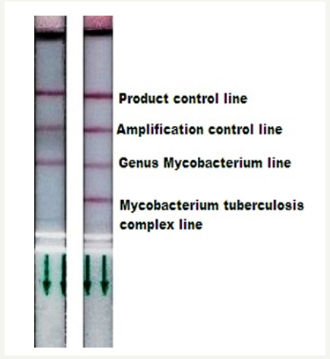
Speed-oligo® Mycobacteria is an oligochromatographic test for the qualitative detection of Mycobacterium genus and the species of M. tuberculosis complex, directly in clinical samples. It is based on polymerase chain reaction targeting 16S rRNA and 16S-23S rRNA regions and double-reverse hybridization on a dipstick using probes bound to colloidal gold and to the membrane. In this study, we evaluated 25 type reference strains of mycobacteria (18 non-tuberculosis mycobacteria, M. tuberculosis H37Rv and M. tuberculosis H37Ra), 60 sputum samples (40 smear positive, 20 smear negative) collected from patient with suspected TB. All results were compared with microscopy, Löwenstein Jensen culture and Inno-Lipa (GenoType Mycobacterium CM/AS; Hain Lifescience, Germany). All smear positive sputum samples were positive with microscopy, culture and Speed-oligo® Mycobacteria. Of 20 smear negative sputum samples, 7 were culture positive. Of 7 culture positive samples, 3 were positive with microscopy and Speedoligo ® Mycobacteria. It is not effective to identify for M. intermedium, M. kansasii and M. xenopi.

For more open access journals in Crimson Publishers,
please click on link: https://crimsonpublishers.com/
Please click on link: https://crimsonpublishers.com/cjmi/

Tuesday, October 22, 2019

Molecular Dıagnostic Tests Used in the Dıagnosis of Tuberculosis:Crimson Publishers

Molecular Dıagnostic Tests Used in the Dıagnosis of Tuberculosis: Crimson publishers_Cohesive Journal of Microbiology &Infectious Disease:  Infectious DiseaseOpen Access Journal: Crimson Publishers

The definitive diagnosis of tuberculosis (TB) is dependent on the isolation, identification and drug susceptibility testing of the causal agent Mycobacterium tuberculosis by cultivation. Smear microscopy has poor sensitivity and culture is slow to yield results. The resurgence of tuberculosis worldwide has been accompanied by an increase in the incidence of multidrug-resistant (MDR) tuberculosis on all continents. At the same time, a number of other nontuberculous mycobacterial (NTM) species are emerging as causes of disease. A quick and correct diagnosis of symptomatic tuberculosis is critical for the control of this serious disease. The nucleic acid amplification techniques (NAATs) and other molecular biology methods (i .e. DNA hybridization, DNA sequencing, etc.) are essential in today’s laboratory practices for detection and characterization of mycobacteria.


For more open access journals in Crimson Publishers,
please click on link: https://crimsonpublishers.com/
For more articles in Infectious Disease Open Access Journals,
Please click on link: https://crimsonpublishers.com/cjmi/

Follow On Publons  : https://publons.com/publisher/6342/crimson-publishers
Follow On Linkedin : https://www.linkedin.com/company/crimsonpublishers