Wednesday, May 27, 2020

Established the Environmental Monitoring Program Indicators to Prevent Disease Infection and Promote Sustainable Development_Crimson Publishers

Established the Environmental Monitoring Program Indicators to Prevent Disease Infection and Promote Sustainable Development in Cohesive Journal of microbiology & infectious disease
https://crimsonpublishers.com/cjmi/fulltext/CJMI.000534.php
Marine aquaculture may also cause environmental degradation from feces, uneaten feed and use of chemicals if the local carrying capacity is exceeded [1]. The most important benthic impact relates to the formation of anoxic sediments [2-4] which can be easily monitored. Both sediment condition and waste accumulation are good indicators for detecting the environmental condition at aquaculture sites. Beveridge [5] revealed that environmental deterioration because of high organic matter concentrations in the sediments may affect the health of farmed fish and hence profitability. Waste and waste-makes quality management for marine aquaculture in other countries has not only focused on the release limitations of organic matter, and nutrients [6-8] but also on chemicals [9] used on the farms regardless wherever into estuaries or nearshore coastal waters [10,11]. This investigation uses an environmental monitoring program to understand and assess the environmental impact of marine farming. Environmental monitoring program ratings for the near-field effects from trace metals in sediments [12]. Waste management for marine aquaculture in other countries has focused on the release of organic matter, nutrients, and chemicals directly from the farms into estuaries and coastal waters. Finfish farms need more extensive programs for the management of waste than shellfish farms, because finfish provide exogenous food sources [10]. Redox potential is useful as an indicator of the degree of microbial activity in organically-enriched sediments [13,14]. Here we used an EMP to determine and assess the environmental impact of farming.
For more open access journals in Crimson Publishers,
please click on link: https://crimsonpublishers.com/

Wednesday, October 30, 2019

The Evaluation of the Speed-Oligo® Mycobacteria Assay for Identification of Mycobacterium spp. from Smear Positive and Negative Sputum Samples: Crimson Publishers

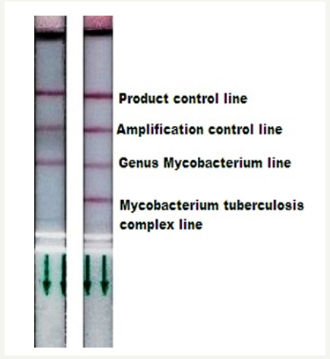
The Evaluation of the Speed-Oligo® Mycobacteria Assay for Identification of Mycobacterium spp. from Smear Positive and Negative Sputum Samples by Gülnur Tarhan in Cohesive Journal of Microbiology & Infectious Disease


Speed-oligo® Mycobacteria is an oligochromatographic test for the qualitative detection of Mycobacterium genus and the species of M. tuberculosis complex, directly in clinical samples. It is based on polymerase chain reaction targeting 16S rRNA and 16S-23S rRNA regions and double-reverse hybridization on a dipstick using probes bound to colloidal gold and to the membrane. In this study, we evaluated 25 type reference strains of mycobacteria (18 non-tuberculosis mycobacteria, M. tuberculosis H37Rv and M. tuberculosis H37Ra), 60 sputum samples (40 smear positive, 20 smear negative) collected from patient with suspected TB. All results were compared with microscopy, Löwenstein Jensen culture and Inno-Lipa (GenoType Mycobacterium CM/AS; Hain Lifescience, Germany). All smear positive sputum samples were positive with microscopy, culture and Speed-oligo® Mycobacteria. Of 20 smear negative sputum samples, 7 were culture positive. Of 7 culture positive samples, 3 were positive with microscopy and Speedoligo ® Mycobacteria. It is not effective to identify for M. intermedium, M. kansasii and M. xenopi.

For more open access journals in Crimson Publishers,
please click on link: https://crimsonpublishers.com/
Please click on link: https://crimsonpublishers.com/cjmi/

Tuesday, October 22, 2019

Molecular Dıagnostic Tests Used in the Dıagnosis of Tuberculosis:Crimson Publishers

Molecular Dıagnostic Tests Used in the Dıagnosis of Tuberculosis: Crimson publishers_Cohesive Journal of Microbiology &Infectious Disease:  Infectious DiseaseOpen Access Journal: Crimson Publishers

The definitive diagnosis of tuberculosis (TB) is dependent on the isolation, identification and drug susceptibility testing of the causal agent Mycobacterium tuberculosis by cultivation. Smear microscopy has poor sensitivity and culture is slow to yield results. The resurgence of tuberculosis worldwide has been accompanied by an increase in the incidence of multidrug-resistant (MDR) tuberculosis on all continents. At the same time, a number of other nontuberculous mycobacterial (NTM) species are emerging as causes of disease. A quick and correct diagnosis of symptomatic tuberculosis is critical for the control of this serious disease. The nucleic acid amplification techniques (NAATs) and other molecular biology methods (i .e. DNA hybridization, DNA sequencing, etc.) are essential in today’s laboratory practices for detection and characterization of mycobacteria.


For more open access journals in Crimson Publishers,
please click on link: https://crimsonpublishers.com/
For more articles in Infectious Disease Open Access Journals,
Please click on link: https://crimsonpublishers.com/cjmi/

Follow On Publons  : https://publons.com/publisher/6342/crimson-publishers
Follow On Linkedin : https://www.linkedin.com/company/crimsonpublishers

Sunday, September 29, 2019

The Place Importance of Serologic Techniques in Tuberculosis Dıagnosis_Crimson Publishers


The Place Importance of Serologic Techniques in Tuberculosis Dıagnosis by Gülnur Tarhan in Cohesive Journal of Microbiology & InfectiousDisease: Crimson Publishers_Infectious Disease Open Access Journals

Diagnosing active TB accurately and rapidly is a key challenge for eradicating the TB epidemic. Conventional culture methods are slow and staining methods not sufficiently sensitive. Nucleic acid amplification techniques (NAATs) tend to be costly and in some cases lack sensitivity. Antibody detection tests (serological tests) have a long history and have been used successfully for the rapid diagnosis of many infectious diseases (e.g., HIV, syphilis, and viral hepatitis). TB serological tests almost exclusively rely on antibody recognition of antigens of Mycobacterium tuberculosis by the humoral immune response, as opposed to antigen recognition by the cellular immune response (e.g. interferon-gamma release assays. These tests use various modifications of enzyme-linked immunosorbent assay (ELISA) or immunochromatographic methods to detect different antibody classes. Cellular immunodiagnostics, including tuberculin skin test (TST) and Interferon-Gamma Release Assays (IGRAs) have been used to diagnose latent tuberculosis infection (LTBI). The TST is the only universally accepted test for the diagnosis of LTBI.


For more open access journals in Crimson Publishers,
please click on link: https://crimsonpublishers.com/
For more articles in Infectious Disease Open Access Journals,
Please click on link: https://crimsonpublishers.com/cjmi/

Follow On Publons  : https://publons.com/publisher/6342/crimson-publishers
Follow On Linkedin : https://www.linkedin.com/company/crimsonpublishers


Wednesday, September 25, 2019

Wednesday, September 18, 2019